Should you iron or steam clothes before selling them online?
Some sellers steam everything, others never bother. Here's a simple way to decide which items are worth the time, whether to steam or iron, and how to keep creases from coming back.
Ashish · 6 min read
Ask on any reselling group whether you should iron clothes before you list them and you'll get two camps. One says they steam every single item and wouldn't dream of posting creased photos. The other says they sell £3 T-shirts, it'll get creased in the post anyway, and life's too short.
Both are partly right. This guide gives you a simple way to decide, item by item, plus the quickest ways to get creases out and keep them out.
The short answer
Steam or iron before you take the photos when the item is worth more than a few pounds or dollars, when the creases hide its shape, or when it's made of something that creases badly, like linen or cotton shirting. Skip it for cheap, crease-resistant basics if the creases are light.
You're ironing for the photo, not the delivery. Buyers decide from the photos, and that's where creases cost you.
Why creases cost you sales
Creases don't change the item, but they change how buyers read the listing:
- They hide the shape. A crumpled dress doesn't show its cut, length or drape, so the buyer has to guess.
- They make buyers wonder about flaws. If the fabric is folded and creased, a mark or a hole could be hiding in a fold. Some sellers on r/vinted say this is exactly why they iron.
- They look like less care. Buyers on resale threads often say a seller who takes care with photos probably takes care with the item and the packing too.
None of this means a creased item can't sell. Plenty do, especially popular brands at low prices. But on items where you want a good price, creases are an easy objection to remove.
A simple rule for deciding
Ask three questions:
- 1Is it worth more than a cheap basic? Coats, dresses, branded and vintage pieces are worth the few minutes. A plain T-shirt priced to go quickly might not be.
- 2Do the creases hide anything? If you can't see the shape, length or details, steam it.
- 3Is it a fabric that shows every crease? Linen, cotton shirts, silk and satin look much worse creased than jersey or knitwear.
If the answer to any of these is yes, steam it.
Steam or iron?
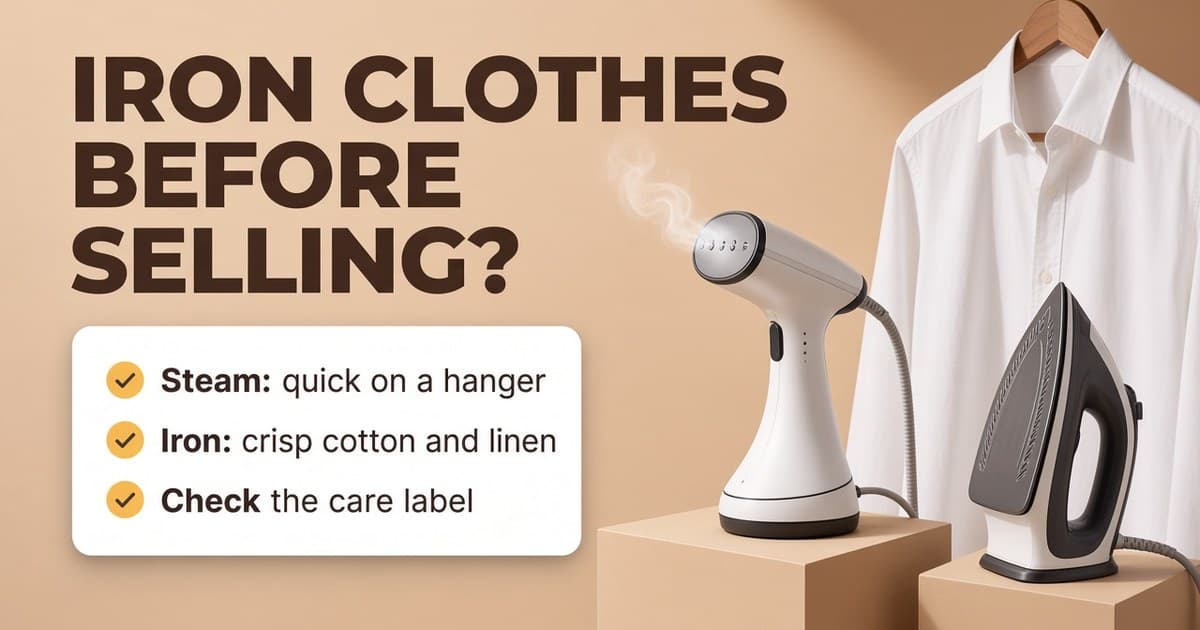
Steaming is usually quicker for resale. You hang the item on the hanger you'll photograph it on, steam it and shoot it without moving it. It's gentler on many fabrics and there's no ironing board to set up. Resellers on Reddit often recommend a cheap handheld steamer over an iron.
Ironing gives a crisper finish on cotton shirts, linen and trousers with a front crease. It's slower, and you have to hang the item straight away or it creases again.
Check the care label first. A crossed-out iron symbol means no ironing. Take extra care with anything with sequins, prints, plastic trims or a coating, and test on an inside seam if you're not sure. Leather and suede need different care entirely.
No steamer or iron?
- Shower steam: hang the item in the bathroom while the shower runs hot, then smooth it with your hands.
- Damp and stretch: mist the creases lightly with water, pull the fabric straight and let it hang dry.
- Tumble dryer: a few minutes on low with a damp cloth, if the care label allows tumble drying.
These work for light creases. Deep fold lines usually need a steamer or iron.
Keep the creases away until it sells
- Store steamed items on hangers rather than in a pile.
- If you have to fold items, fold them along natural lines and don't stack heavy things on top.
- When you post it, fold it around tissue paper or a piece of card to soften the folds.
- It's fine to say in the description that the item may have light creases from posting. Most buyers expect it.
Can you edit the creases out instead?
Yes, on most platforms, as long as the photo still shows the item accurately. eBay, Depop and Poshmark ask for photos that accurately represent the item, and Etsy allows edits that don't hide flaws or change how the item looks, as long as one photo is unedited.
Vinted is different. Its Catalog Rules say photos have to "represent the item as it is - no image editing is allowed" (Vinted Catalog Rules). On Vinted, steam or iron the real item.
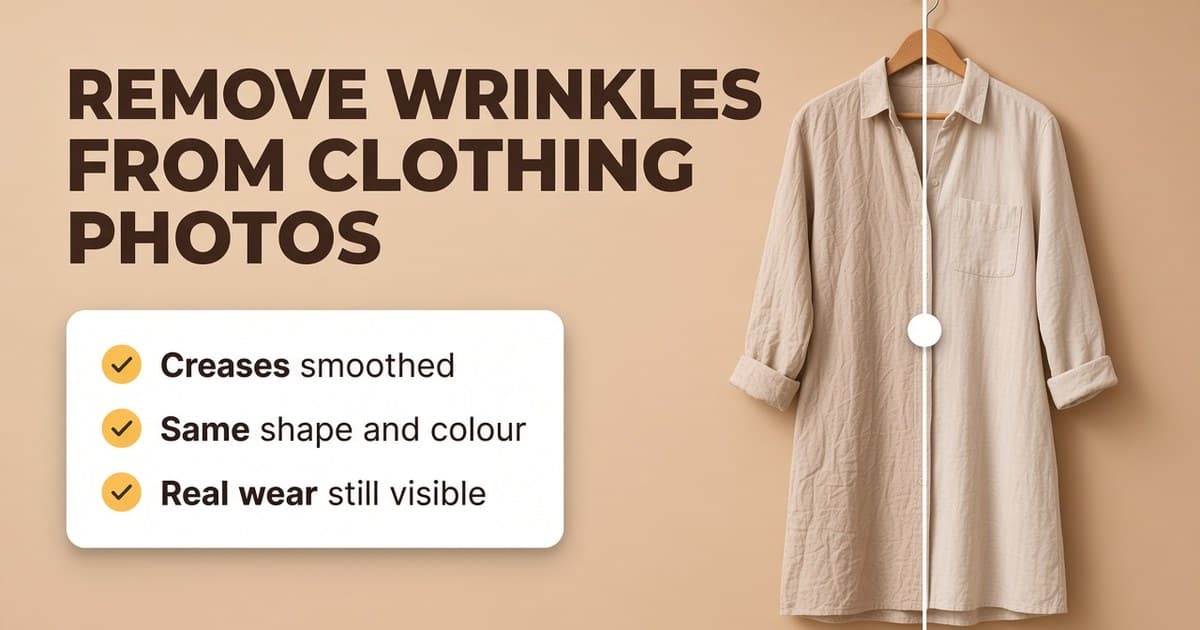
Our guide to removing wrinkles from clothes in photos covers the editing options and what to check.
A worked example
This is a made-up example. "Eddleston" isn't a real brand.
A seller has three items to list on eBay and Depop:
- An Eddleston white cotton shirt with heavy creases on the front. It's worth a good price and white cotton shows every crease. Iron it, hang it, photograph it.
- A grey jersey T-shirt with light creases, priced low. The creases don't hide the shape. Skip it, smooth it with your hands and photograph it flat.
- A navy satin slip dress with fold lines across the skirt. Steam it on the hanger, on low, testing on the inside seam first.
Quick checklist
- Worth more than a cheap basic? Steam it.
- Creases hiding the shape or details? Steam it.
- Linen, cotton shirting, silk or satin? Steam or iron it.
- Care label checked before any heat.
- Hung straight after, and kept on a hanger until it sells.
- Folded around tissue when you post it.
Skip the steamer with YelloShelf Product Studio
If you've got a rail of items and an evening to list them, steaming every one before the photos can take longer than the listing. YelloShelf's Product Studio has a Steam tool that smooths creases and crumpled folds in the photos you've already taken, up to 20 at a time. The item keeps its real shape, size, colour, print and logo, and real wear such as stains, holes, fading and pilling stays visible. That's what keeps a listing honest and keeps returns away. You drag a slider to compare each edit with your original before you download it.
Steam is 55 credits a photo, which is $0.55 on the $10 pack. Clean up (loose lint, dust and threads) and Light (true colours) work on their own if a photo needs them too. You choose which photos to keep and upload them yourself. For Vinted, steam the real item, as above.
No subscription or free trial. Pay as you go credit packs from $10, with a 7-day money-back guarantee on your first purchase.
Made by the team behind YelloShelf
No time to steam every item?
Upload your clothing photos and let Steam smooth the creases. Real wear stays visible, and you compare every edit with your original.
- Pay as you go credit packs from $10
- No subscription
- 7-day money-back guarantee on your first purchase
FAQ
Should I iron clothes before selling them on Vinted?
For anything worth more than a few pounds, or anything where the creases hide the shape, yes. Vinted's rules say photos must show the item as it is with no image editing, so steaming or ironing the real item is the way to get crease-free photos there.
Is steaming or ironing better for resale?
Steaming is usually quicker, because you can steam the item on the hanger and photograph it straight away, and it's gentler on many fabrics. Ironing gives a crisper finish on cotton shirts, linen and trousers.
Is it worth ironing cheap clothes before selling?
Often not. If an item is a crease-resistant basic priced to sell quickly and the creases are light, smoothing it with your hands is usually enough. Save the steamer for items where creases hide the shape or where you want a good price.
Will clothes get creased in the post anyway?
Usually a little. Folding around tissue paper helps. Buyers mostly decide from the photos, which is why it's worth getting the creases out before you take them.
How do I get creases out of clothes without an iron?
Hang the item in a steamy bathroom while the shower runs, mist the creases lightly with water and pull the fabric straight, or tumble it for a few minutes on low with a damp cloth if the care label allows it.